 English
 中文简体
中文简体 русский
 Español
 عربى
عربىCar seat covers are generally manufactured according to common vehicle seat dimensions. Although exact measurements vary by manufacturer and vehicle model, products fall into two categories: universal fit and custom fit.
Universal-fit covers are designed to accommodate a wide range of passenger vehicles, including sedans, sport utility vehicles, and light trucks. Typical front seat cushion widths range from approximately 45 to 55 centimeters, while seat back heights commonly range from 55 to 65 centimeters. Rear bench covers are often produced in segmented formats, with total widths ranging between 120 and 150 centimeters, depending on vehicle class. Elastic straps, adjustable buckles, and flexible side panels allow adaptation to moderate variations in seat geometry.
Custom-fit versions are patterned according to specific vehicle models. These covers are manufactured based on precise seat contours, including headrests, side bolsters, and armrest openings. In vehicles equipped with side airbags, covers are constructed with reserved stitching or designated release seams to maintain safety compliance.
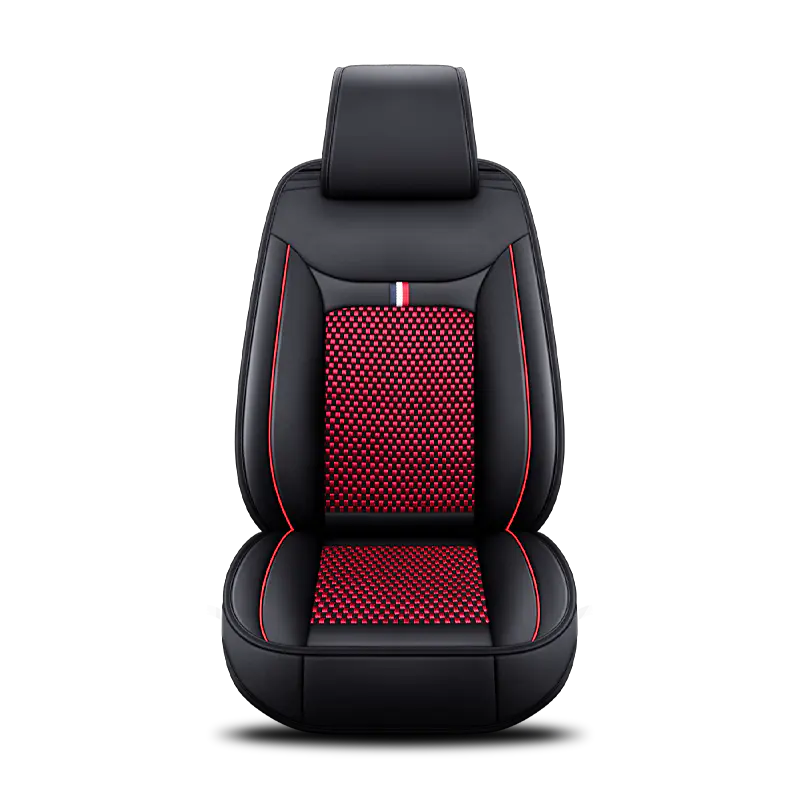
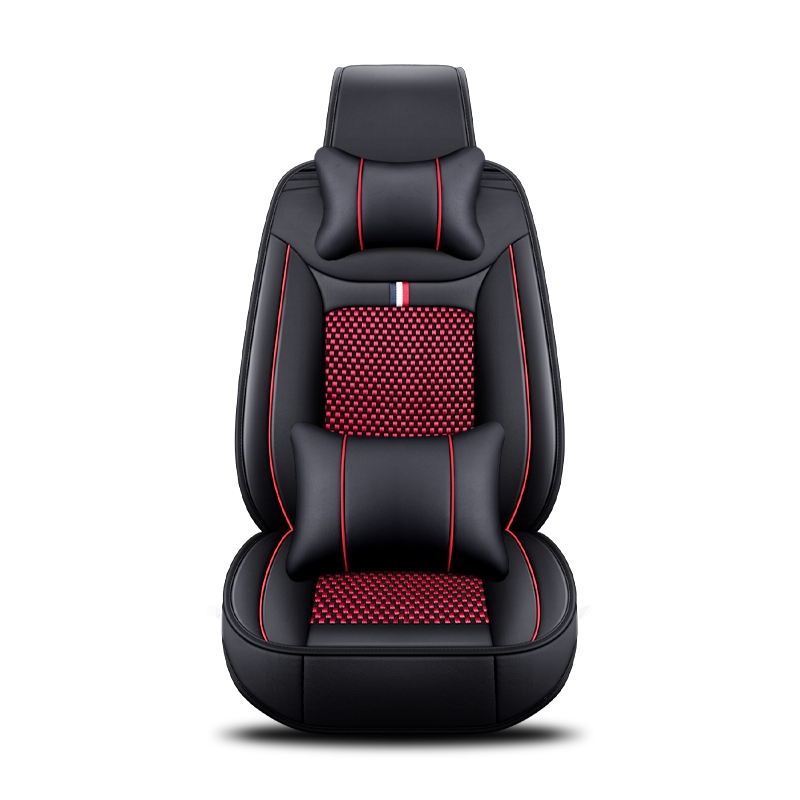
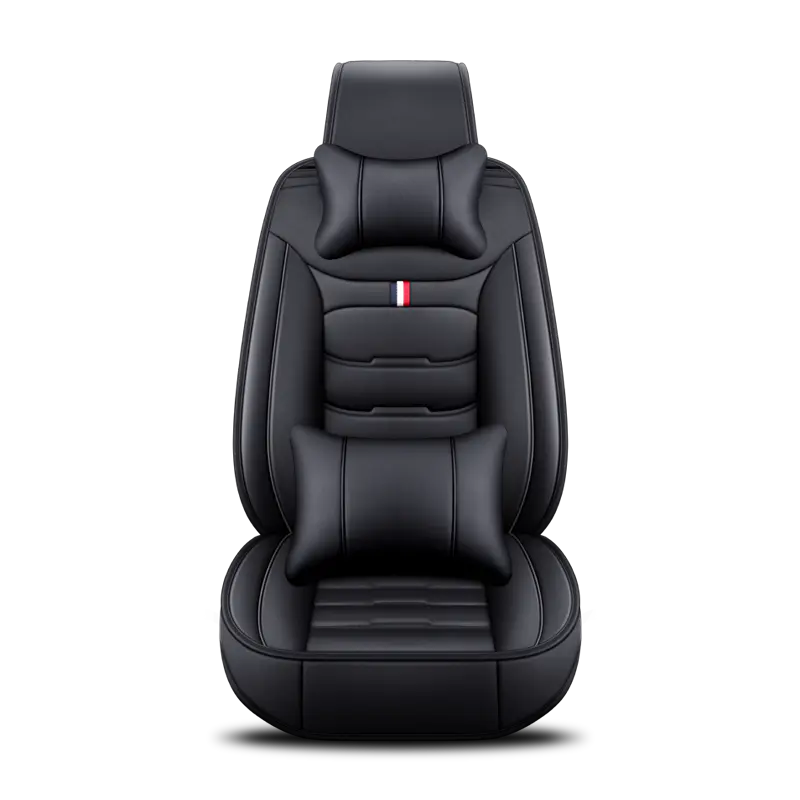
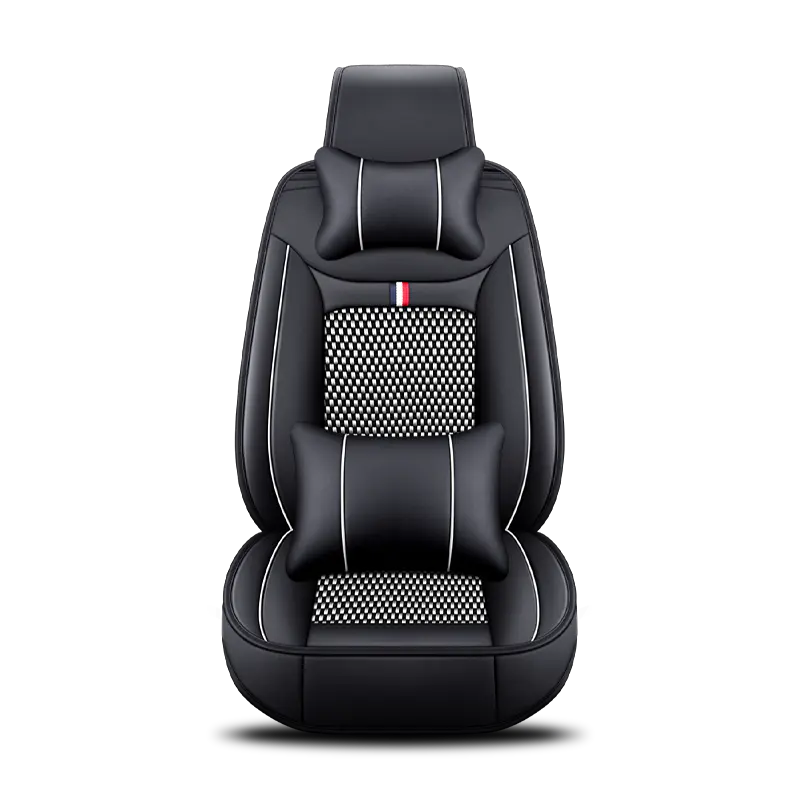
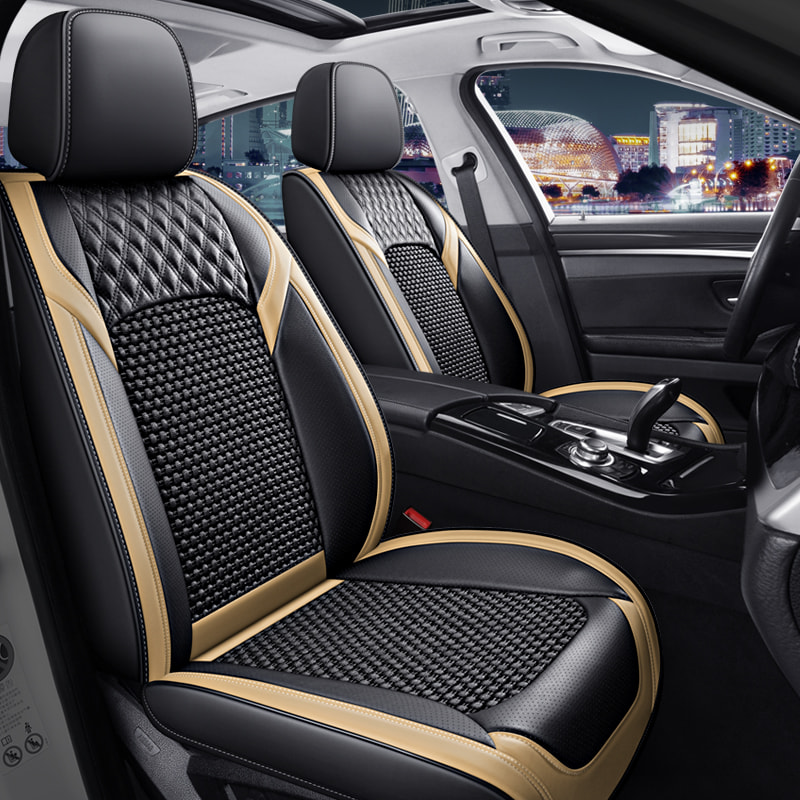
In terms of shape, the Leather & Ice Silk Car Seat Cover typically follows ergonomic seat contours. The cushion section mirrors the horizontal base of the seat, while the backrest section accommodates lumbar curvature. Many designs incorporate segmented panels that align with bolstered seat structures, allowing the cover to conform to curved surfaces without excessive wrinkling. Some rear seat covers include split configurations to accommodate folding seatbacks in 40/60 or 50/50 layouts.
The leather component is often positioned along high-wear areas such as side bolsters and edges. Ice silk panels are commonly placed in central contact zones where thermal comfort is relevant. This panel-based structural design allows the cover to maintain its shape while distributing functional materials according to usage patterns.
How Comfortable Is the Leather & Ice Silk Car Seat Cover?
Comfort in automotive seating depends on several factors: surface texture, pressure distribution, thermal sensation, and seating stability. The Leather & Ice Silk Car Seat Cover addresses these through layered construction.
The ice silk fabric is engineered from fine synthetic filaments, typically polyester or nylon derivatives. These fibers have smooth surfaces and low friction coefficients, which reduce resistance between clothing and the seat. This smoothness can decrease minor discomfort caused by fabric roughness. Additionally, ice silk often has moderate thermal conductivity, allowing heat to transfer away from the body more efficiently than thicker woven fabrics. This produces a cooling sensation when seated.
The leather component contributes structural firmness. Synthetic leather surfaces are relatively smooth and resistant to surface deformation. When combined with internal padding—usually polyurethane foam or polyester filling—the cover can provide additional cushioning beyond the original seat. The foam layer distributes body weight across a wider area, reducing localized pressure points.
However, overall comfort also depends on material density and thickness. Excessively thick padding may alter the original ergonomic design of the vehicle seat, while insufficient padding may offer limited improvement over factory upholstery. Properly designed covers aim to maintain the original seat contour while adding moderate cushioning.
Seat stability also influences comfort. Anti-slip backing materials, such as silicone dots or textured fabric layers, are commonly integrated to prevent shifting during braking or acceleration. Stable positioning reduces the need for readjustment and supports consistent posture during extended driving.
How Breathable Is the Leather & Ice Silk Car Seat Cover?
Breathability refers to the material's ability to permit airflow and moisture vapor transmission. In composite seat covers, breathability depends on both textile selection and structural design.
Ice silk fabric is generally more breathable than solid polymer surfaces because it is woven or knitted. The microscopic gaps between fibers allow air to circulate and moisture vapor to evaporate. Some versions are engineered with moisture-wicking properties, enabling perspiration to spread across a broader surface area for faster evaporation.
Synthetic leather is largely impermeable due to its polymer coating. While this property enhances water resistance and stain protection, it limits airflow. To address this, some seat covers incorporate perforated leather sections or position leather primarily along side panels while reserving the central seating zone for breathable ice silk fabric.
The overall breathability of the cover, therefore, depends on material distribution and construction quality. If waterproof backing layers are included, airflow may be partially restricted. However, when ice silk panels dominate the contact surface and ventilation gaps are preserved, the cover can maintain moderate airflow.
Environmental conditions also influence perceived breathability. In hot and humid climates, passive airflow alone may not fully prevent moisture buildup. In temperate conditions, the breathable textile structure can help regulate microclimate conditions between the occupant and the seat surface.