 English
 中文简体
中文简体 русский
 Español
 عربى
عربىFit Assessment and Vehicle Compatibility
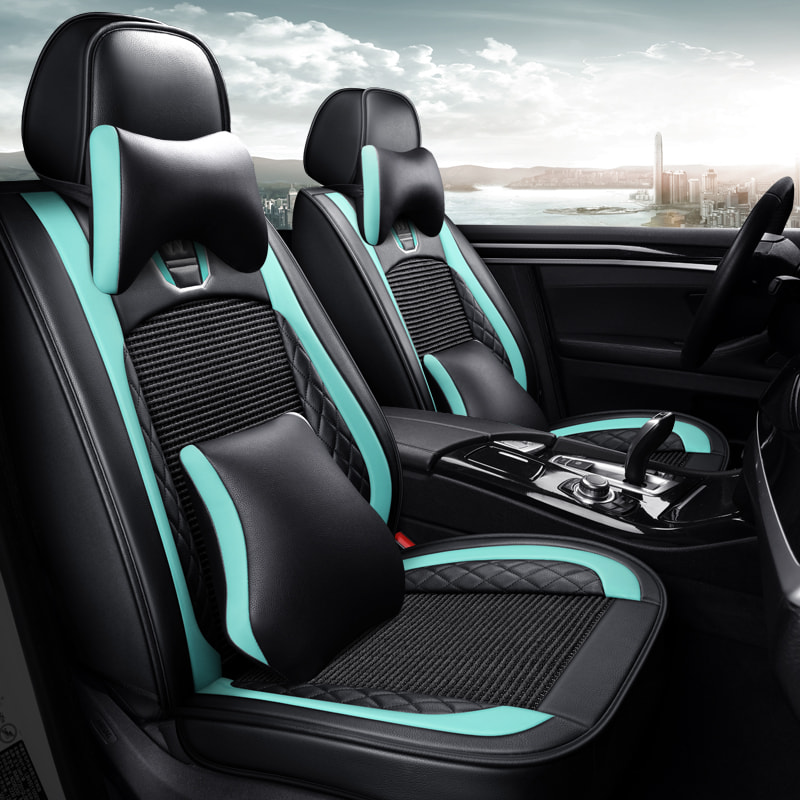
Universal car seat protectors are designed to fit a broad range of vehicle seating configurations, but achieving satisfactory installation requires careful assessment of compatibility before purchase. Unlike custom-fit protectors tailored to specific vehicle models, universal variants accommodate varying seat dimensions through adjustable straps, elastic edges, and non-slip backing materials. However, the term “universal” does not guarantee fit across all vehicles; seat dimensions, headrest configurations, and seat contour variations affect installation quality.
Measurement verification is the initial step. Key dimensions include seat base width at the front edge, seat base depth, backrest height, and the number and spacing of headrest posts. Many universal protectors are designed for seat base widths between 50 and 55 centimeters, accommodating the majority of passenger vehicles, compact SUVs, and light trucks. Oversized seats in full-size trucks, heavy SUVs, or vehicles with integrated seat bolsters may require extended-size universal protectors or custom-fit alternatives. Conversely, compact vehicles with narrow seats may experience excess material bunching, which compromises both appearance and protection effectiveness.
Headrest configuration significantly affects installation. Protectors typically attach using straps that loop around headrest posts, elastic bands, or full headrest covers. Vehicles with integrated headrests—where the headrest is molded into the seat back—may not accommodate strap-type attachments. Similarly, vehicles with rear-seat entertainment screens, integrated seat controls, or side airbag labels on seatbacks require consideration to ensure that protector installation does not interfere with these features. Before installation, the protector's cutouts and strap positions should be evaluated against the specific vehicle's seat layout.
Installation Methodology and Secure Attachment
Proper installation of universal leather and ice silk seat protectors directly affects their performance, longevity, and safety. The installation process varies by design but generally follows a sequence of positioning, attachment, and tension adjustment.
The protector should be positioned with the non-slip backing (typically silicone, rubber, or polyurethane coating) in contact with the original seat surface. This backing layer is intended to prevent shifting during vehicle operation. Positioning begins by draping the protector over the seat back, ensuring that the upper edge aligns with the top of the seat and that cutouts for headrest posts are correctly aligned. For two-piece protectors—separate units for seat base and back—the base portion is placed on the seat cushion, with excess material tucked into the gap between seat base and backrest where possible.
Attachment mechanisms vary by product. Common systems include:
Headrest straps: Elastic or adjustable straps that loop around headrest posts. These should be positioned so that the headrest remains fully adjustable and that straps do not create pressure points. Over-tightening straps may cause bunching at the top of the seat back.
Lower anchor straps: Straps with hooks or clips that attach to the seat frame beneath the seat base. Proper routing ensures that these straps do not interfere with seat adjustment mechanisms or under-seat storage. Straps should be secured without excessive tension that could distort the seat cushion foam.
Elastic edges: Some protectors incorporate elastic binding along the perimeter, designed to grip the edges of the seat. This elastic must be stretched evenly around the seat edges; uneven stretching creates areas of insufficient coverage.
Cleaning and Maintenance Protocols
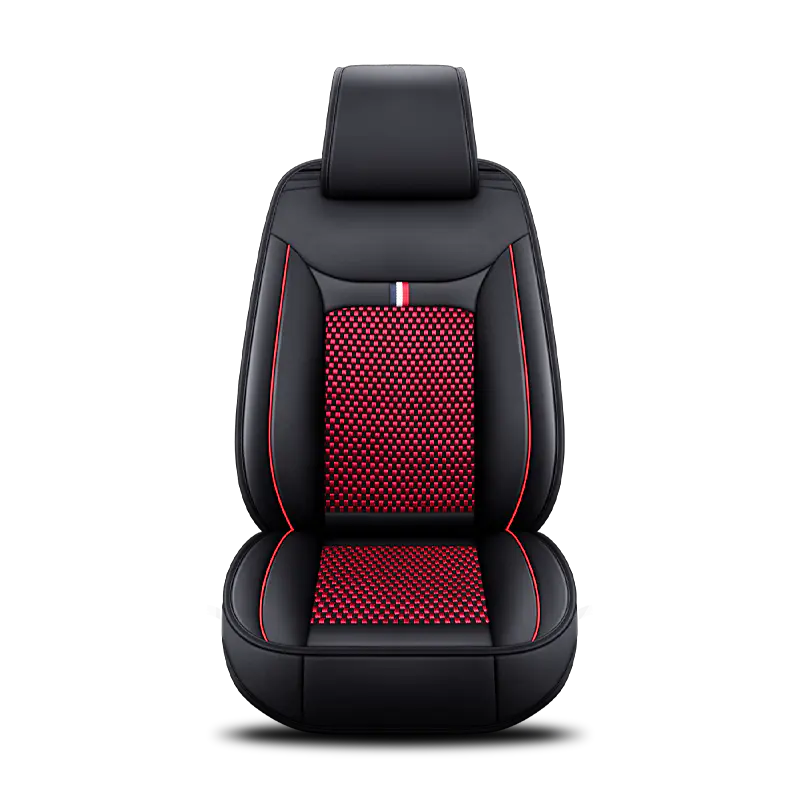
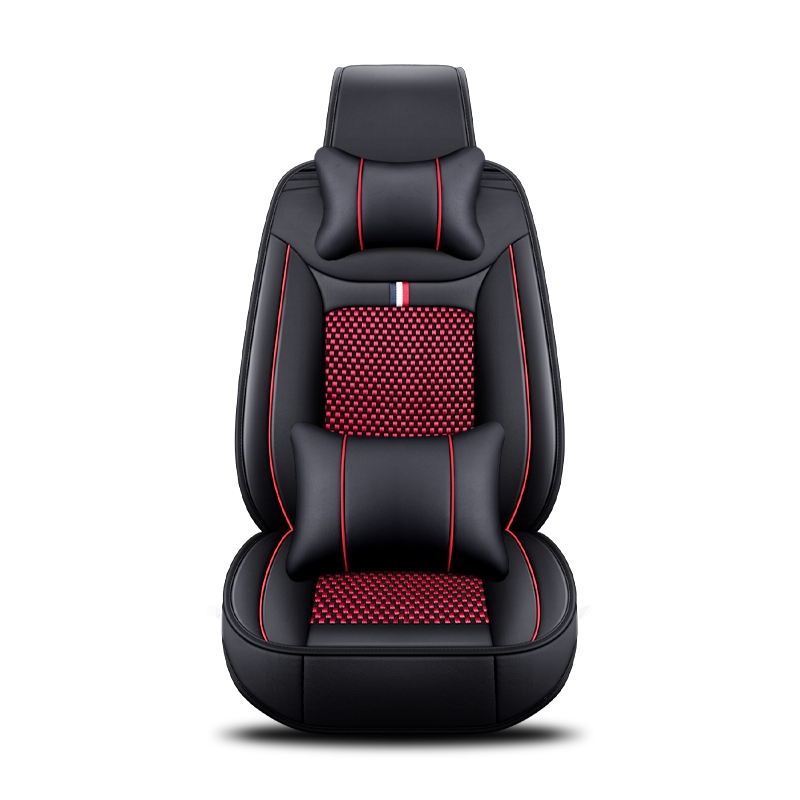
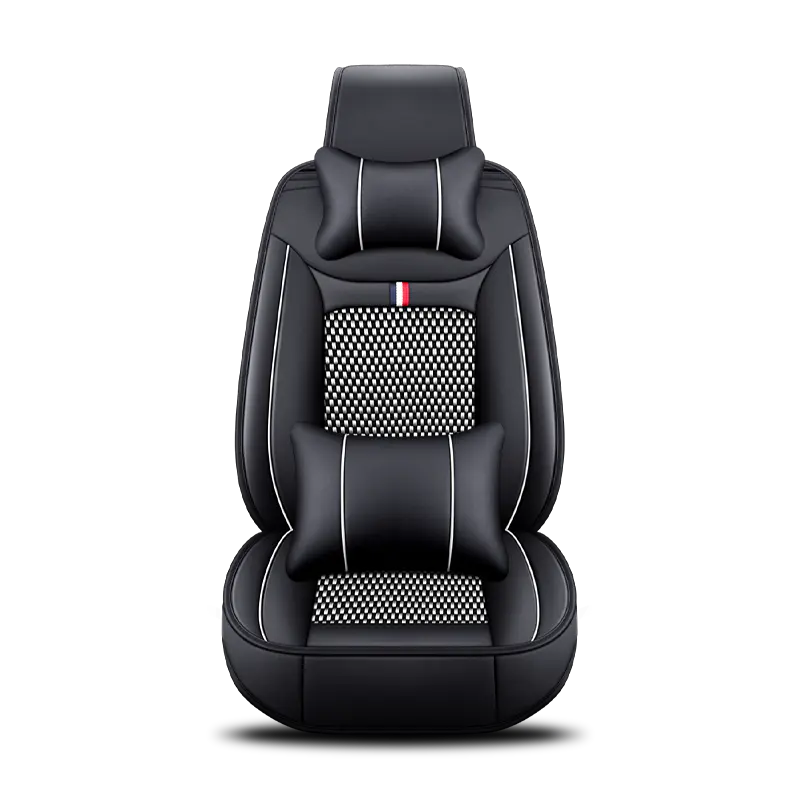
The dual-material construction of universal leather and ice silk seat protectors—combining polyurethane or PVC “leather” sections with ice silk (a polyester or nylon blend designed for cooling properties)—requires specific cleaning approaches to preserve both materials' characteristics.
Leather-like sections: The synthetic leather portions are typically polyurethane (PU) or polyvinyl chloride (PVC). These materials resist moisture and stains better than genuine leather but require specific care. Cleaning should be performed with mild soap solutions (pH-neutral) applied with soft cloths. Abrasive cleaners, bleach, ammonia-based products, and citrus-based degreasers can damage the surface finish, causing discoloration, loss of flexibility, or surface degradation. For spills, immediate blotting is preferred over rubbing, which can spread the liquid and potentially force it into seams.
Ice silk sections: Ice silk—a marketing term for knitted polyester or nylon fabrics with high moisture-wicking properties—requires different care. These sections are designed to remain cool to the touch by promoting evaporation of moisture. Frequent washing removes accumulated oils, salts, and dirt that clog the fabric's capillary structure, reducing its cooling effectiveness. Machine washing instructions vary; many ice silk protectors specify cold water, gentle cycles, and air drying. Fabric softeners should be avoided, as they coat fibers and inhibit moisture-wicking properties. High heat drying can cause shrinkage of the fabric or melting of synthetic fibers.
Seam and edge care: The seams where leather-like materials join ice silk sections represent potential failure points. During cleaning, seams should be inspected for loose stitching or separation. Moisture accumulation in seams—particularly in vehicles used in humid climates or with occupants who are active or perspire heavily—can promote bacterial growth or adhesive degradation. Periodic airing of protectors by removing them from the vehicle and allowing full drying extends service life.